An idea for a future owner
An evidence-forward whitening brand
A practical launch model for one whitening product, one supportable claim set, and an evidence center that shows its work.
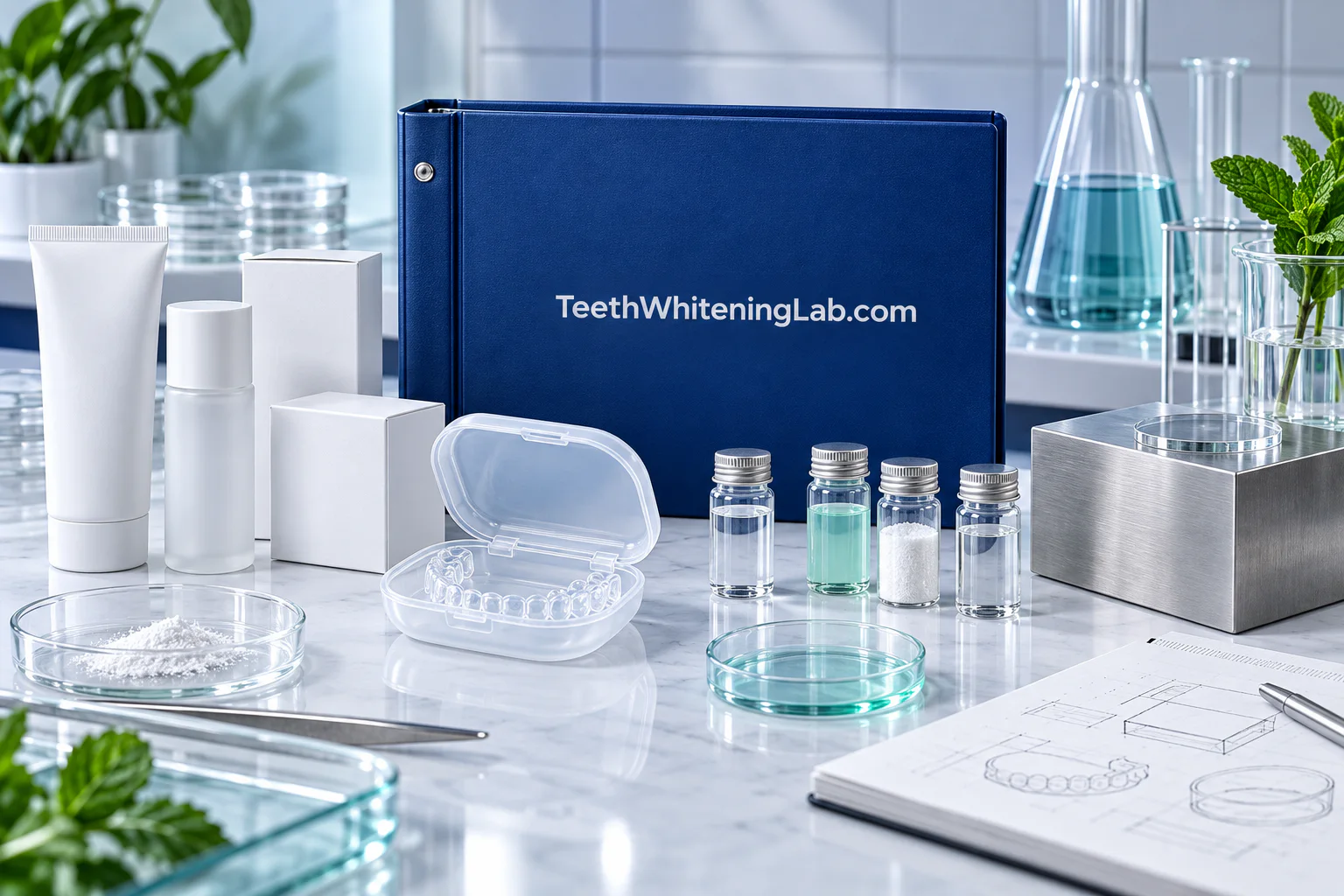
An at-home whitening brand can be easy to imagine and hard to build responsibly. The packaging is compact. The customer goal sounds simple. The underlying work reaches into formulation, manufacturing, directions, claim review, customer support, and the uncomfortable possibility that a product is not right for every person or every kind of discoloration.
TeethWhiteningLab.com could give that business a direct name and a built-in editorial structure. The concept described here is illustrative. No whitening product is currently made or sold under the domain.
Start with one customer and one format
The first customer should be more specific than anyone who wants whiter teeth. A future operator might focus on adults already familiar with at-home whitening who want clearer product documentation. Another possible audience is the first-time buyer who is comparing surface-stain products with peroxide-based bleaching and needs plain explanations before choosing what to discuss with a dentist.
Those audiences may need different products and support. The first launch should choose one. It should also choose one format rather than treating toothpaste, strips, paint-on gels, trays, and every future idea as a single catalog. The ADA whitening overview explains that whitening toothpastes primarily remove surface stains through abrasion, while peroxide bleaching acts chemically on colored compounds within teeth. That distinction is a useful reminder that products can do different jobs even when consumers describe all of them as whitening.
A credible first offer might pair one finished product with a concise evidence center. The product page would explain intended use, ingredients, directions, limitations, and the exact claims the operator can support. The evidence center would show what was tested, what outcome was measured, who reviewed the material, and what remains unknown. It would not borrow a broad claim from a single ingredient and quietly apply it to a different finished formula.
Why the name fits this model
TeethWhiteningLab.com is explicit about the category. That can reduce the time required to explain what the company makes. Lab then creates an expectation of method. A buyer could meet that expectation with transparent development notes, accessible claim summaries, careful version records, and a clear route for reporting adverse experiences or product questions.
Lab should not be used as decoration for authority the company does not have. If a third-party facility performs testing, the brand should identify the test and the relationship accurately. If a dentist or scientific reviewer evaluates a claim, the person's credentials and scope should be stated. If no clinical study exists for the finished product, the copy should not hint that one does.
That standard can shape customer support as much as marketing. A support representative should be able to point to the current directions and limits without improvising clinical advice. Product updates should trigger a review of the supporting pages. Older claims should not remain online after the formula, directions, or evidence changes.
Claims are part of product development
A whitening founder cannot leave claim review until the box is ready to print. FDA guidance on cosmetic labeling says claims must be truthful and not misleading, and it explains that disease or body structure and function claims can change regulatory treatment. The exact classification and requirements depend on the product and intended use, so qualified advice should be built into development.
Advertising brings a second layer. FTC guidance for health-related products addresses express and implied claims, not only the sentence a marketer chooses to highlight. An image, testimonial, comparison, or omission can communicate a promise too. The evidence must fit the specific product, use, audience, and outcome being advertised.
Write the product page from the evidence available for that product. A claim supported for a finished product under defined conditions can be stated with those conditions. A question that the evidence does not answer should be left open. A product limitation can help the right customer understand the offer and avoid turning support into damage control.
Help customers find the product information
The most credible early distribution path is content that answers questions the product can honestly address. A page might explain the difference between removing surface stains and changing intrinsic tooth color. Another might explain why crowns, veneers, and fillings do not respond like natural teeth. A directions page could show how the operator expects the product to be used, with the labeling and qualified review controlling the language.
Search, retailer education, email, and dental-professional outreach can all point to those materials. Customers should be able to reach the current directions and supporting information from a retailer listing, email or product page. Any paid or professional relationship should be disclosed where it affects the reader's understanding.
A launch example could remain small: one format, one package size, a documented claim set, a customer-support playbook, and a short library of reviewed explanations. Early questions could reveal where directions are unclear or where customers expect a result the product does not claim. Those findings can improve the material before the catalog grows.
People and resources needed
The operator would need qualified formulation and manufacturing partners, quality controls, label and advertising review, product-specific evidence, complaint handling, and a process for updating public information. Retail or marketplace requirements would add another layer. Trademark review, insurance, contracts, and privacy practices would belong in the launch plan too.
The customer experience should stay aligned from ad to package to support. A careful landing page cannot rescue an overstated marketplace listing. A clear label cannot fix a creator script that implies a guaranteed outcome. Every channel should work from the same approved claim record.
Acquiring the domain
For the right buyer, TeethWhiteningLab.com could place the product and its evidence under one direct address. The name is available for acquisition; the operating business described here remains an illustrative path. A purchase inquiry should identify the intended product category, the team responsible for development and review, and a preferred trusted transaction platform. A partnership proposal should also state who will fund, build, and operate the company. Include the proposed first product and its stage of development in the inquiry.